
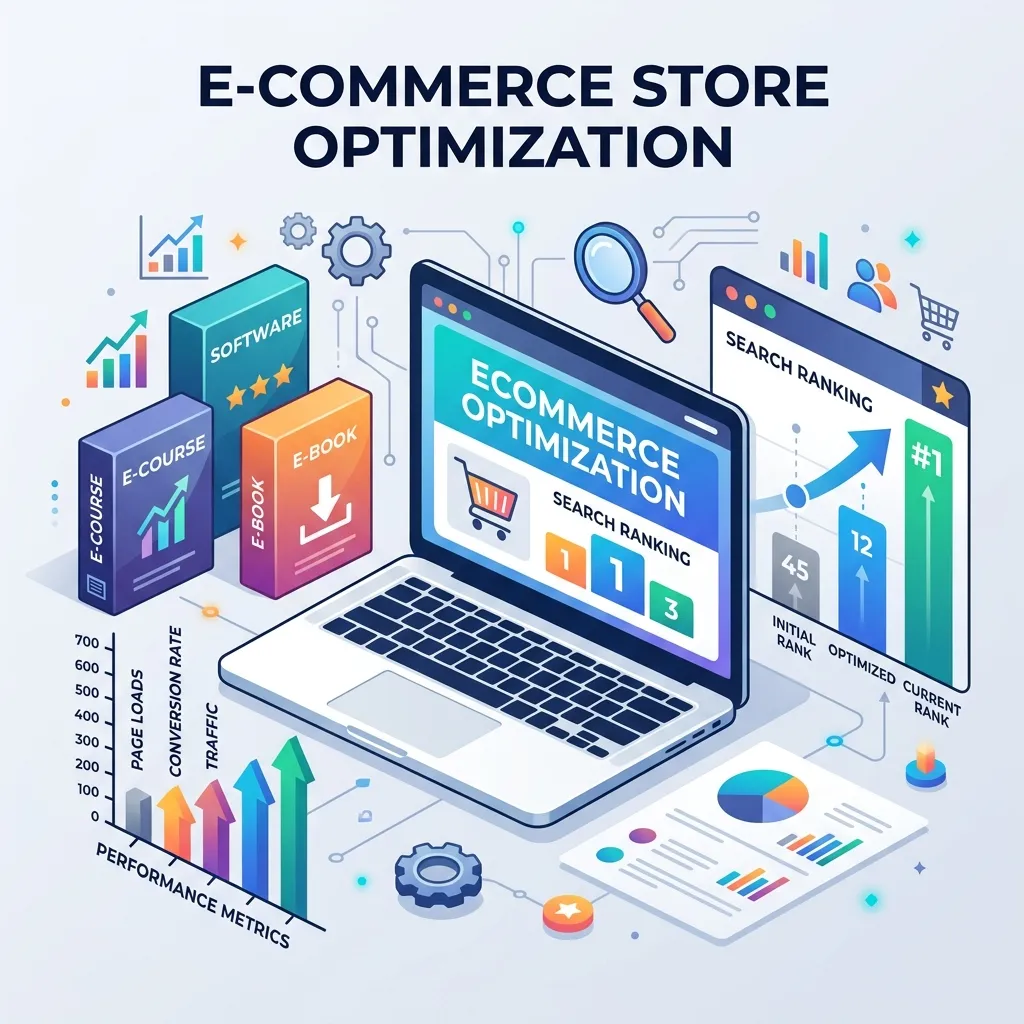
WooCommerce SEO is the single most cost-effective marketing strategy for online stores. Unlike paid advertising that stops working the moment you stop paying, SEO generates compounding organic traffic that grows over time. This guide covers every aspect of WooCommerce SEO in 2026, enhanced with AI tools and strategies.
WooCommerce SEO Fundamentals for 2026
The fundamentals of WooCommerce SEO remain consistent even as algorithms evolve: create high-quality product pages, build a logical site structure, ensure fast page loads, and earn authoritative backlinks. What has changed in 2026 is the sophistication of AI tools that automate and enhance each of these fundamentals.
Before diving into advanced strategies, ensure your WooCommerce store has the basics covered. Install Rank Math or wordpress/plugins/seo/" target="_blank" rel="noopener noreferrer">Yoast SEO for structured data management, configure your permalink structure to include product categories, set up XML sitemaps that include all product pages, and ensure your site loads in under 3 seconds on mobile devices.
Your store's architecture directly impacts SEO performance. Organize products into logical categories and subcategories that reflect how customers search for products. Each category should have unique, keyword-optimized descriptions that help both search engines and shoppers understand what the category contains.
AI-Powered Product Description Optimization
Product descriptions are the cornerstone of WooCommerce SEO. Each product page needs unique, compelling copy that incorporates target keywords naturally while persuading visitors to purchase. For stores with hundreds or thousands of products, AI makes comprehensive product optimization feasible.
Use AI tools to generate initial product descriptions, then enhance them with unique selling points, specific measurements, materials, use cases, and customer benefit statements. AI produces excellent structural foundations — feature lists, benefit-focused paragraphs, and technical specifications — that human editors refine with brand voice and persuasive copywriting.
Focus on long-tail keywords for product pages. Instead of competing for "running shoes" (extremely competitive), target specific variations like "lightweight trail running shoes for wide feet" or "waterproof running shoes under $100." AI keyword research tools identify these specific, high-intent search queries that drive qualified traffic to your product pages.
Schema Markup for WooCommerce Products
Product schema markup enables rich snippets in search results — displaying price, availability, ratings, and review counts directly in Google's search listings. These enhanced listings dramatically increase click-through rates compared to plain text results.
Rank Math SEO automatically generates Product schema for WooCommerce, but verify the output using Google's Rich Results Test tool. Ensure your schema includes all available fields: name, description, image, price, currency, availability, brand, SKU, and aggregate ratings.
{
  "@context": "https://schema.org",
  "@type": "Product",
  "name": "Premium Wireless Headphones",
  "image": "https://store.com/images/headphones.webp",
  "description": "High-fidelity wireless headphones with active noise cancellation.",
  "brand": {"@type": "Brand", "name": "AudioPro"},
  "sku": "AP-WH-2026",
  "offers": {
    "@type": "Offer",
    "price": "149.99",
    "priceCurrency": "USD",
    "availability": "https://schema.org/InStock",
    "seller": {"@type": "Organization", "name": "Your Store"}
  },
  "aggregateRating": {
    "@type": "AggregateRating",
    "ratingValue": "4.7",
    "reviewCount": "156"
  }
}
Category and Collection Page SEO
Category pages are often overlooked in WooCommerce SEO, yet they frequently have the highest ranking potential for competitive keywords. A well-optimized category page for "women's running shoes" can rank for dozens of related search queries and drive significant traffic.
Write unique, substantial descriptions for every product category — minimum 200 words, ideally 500+ words. Include buying guides, size charts, or comparison information that adds genuine value beyond a simple product listing. AI can draft these descriptions efficiently, allowing you to optimize dozens of category pages in a single session.
Implement proper heading hierarchy on category pages. The category name should be the H1, with H2 subheadings for subcategories or content sections. Add filtered navigation that generates clean URLs for faceted search results, ensuring Google can crawl and index specific product combinations.
Image SEO with AI Alt-Text Generation
Product images represent a massive SEO opportunity that most WooCommerce stores neglect. Optimized images rank in Google Image Search, driving additional traffic to your product pages. AI tools automate the most tedious aspect of image SEO — writing descriptive alt text for every product image.
AI image analysis tools can examine your product photos and generate accurate, keyword-rich alt text descriptions automatically. For a store with 500 products averaging 4 images each, this automation saves dozens of hours of manual work while ensuring comprehensive alt text coverage.
Beyond alt text, optimize image file names (use descriptive names like "blue-wireless-headphones-front.webp" instead of "IMG_4523.jpg"), compress images for fast loading, and serve modern formats (WebP, AVIF) with appropriate fallbacks for older browsers.
Internal Linking Strategy for WooCommerce
Internal links distribute ranking authority across your store and help search engines discover and understand your content hierarchy. Build a systematic internal linking strategy that connects related products, links category pages to their best products, and cross-references blog content with relevant product pages.
Create "best of" and "buying guide" blog posts that link to specific products. These content pages target informational keywords (searches like "best wireless headphones for working out") and funnel that traffic to your product pages through contextual internal links. This strategy captures top-of-funnel traffic and guides visitors toward purchase decisions.
Technical SEO Checklist for WooCommerce
- Page Speed: Optimize for sub-3-second mobile load times. Use caching, CDN, and image optimization.
- Mobile Responsiveness: Every product page, category page, and checkout step must work flawlessly on mobile.
- Canonical Tags: Prevent duplicate content from filtered pages, pagination, and product variations.
- Breadcrumbs: Implement structured breadcrumb navigation with BreadcrumbList schema markup.
- Secure Checkout: HTTPS across the entire site, with particular attention to checkout security indicators.
- XML Sitemap: Include all products, categories, and blog posts. Exclude tag archives and low-value pages.
- 404 Handling: Monitor and redirect broken product URLs when items are discontinued.
- Pagination: Implement proper pagination with rel="next" and rel="prev" for category pages with many products.
Measuring and Tracking Rankings
Set up Google Search Console and Google Analytics to track your WooCommerce SEO performance. Monitor key metrics including organic traffic, keyword rankings, click-through rates, and revenue attributed to organic search. Track individual product and category page performance to identify optimization opportunities.
Use AI-powered SEO tools like Rank Math's analytics or Ahrefs to monitor ranking changes, identify declining pages that need content updates, and discover new keyword opportunities based on search trend analysis.
"WooCommerce SEO is a marathon, not a sprint. Consistent optimization over months and years builds a sustainable organic traffic engine that compounds in value over time."
Conclusion
WooCommerce SEO in 2026 combines fundamental best practices with AI-powered tools that make comprehensive optimization achievable even for stores with large catalogs. Focus on unique product descriptions, complete schema markup, fast page loads, and strategic content creation. The stores that invest in SEO now will enjoy compounding organic traffic growth that provides a lasting competitive advantage.